
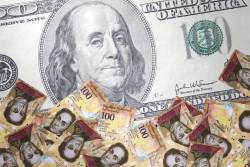
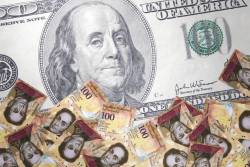
The bolivar, Venezuela’s national currency, has been rendered virtually worthless by years of hyperinflation and economic mismanagement. As a result, the US dollar has become the de facto currency for many Venezuelans. While dollarization has provided some stability amidst economic chaos, it has also exacerbated social inequalities and created a complex humanitarian crisis.
Imagine going to the grocery store and finding that the price of a loaf of bread has doubled overnight. Or consider the stress of having to carry large sums of cash in a country with high crime rates. These are the daily realities for many Venezuelans. The widespread adoption of the US dollar has been a survival mechanism, allowing people to maintain some purchasing power and access basic goods.
However, dollarization is a double-edged sword. While it has helped to stabilize prices, it has also created a two-tiered economy. Those who have access to dollars, often through remittances from family abroad or informal economic activities, have been able to weather the storm. But for the majority of Venezuelans, who rely on the bolivar or have limited access to foreign currency, the situation remains dire.
The informal economy has flourished as a result of dollarization, as people have found creative ways to exchange goods and services outside of formal channels. While this has helped to keep the economy afloat, it has also made it more difficult for the government to track economic activity and implement effective policies.
The human cost of dollarization is significant. Many Venezuelans have been forced to leave their homes and seek refuge in neighboring countries, while those who remain struggle with poverty, hunger, and a lack of basic services. The psychological toll of living in a country with such high levels of uncertainty and instability cannot be overstated.